knacksnews
Omnichannel Marketing 101
Marketers need to adjust to new customer needs when doing business today. Companies have adopted omnichannel marketing styles, which give customers a smooth brand experience in every interaction they have with your business online or offline. This article explains the main features of omnichannel marketing, its advantages, and practical ways businesses can use this approach to make both their company and customers happy.
What Is Omnichannel Marketing?
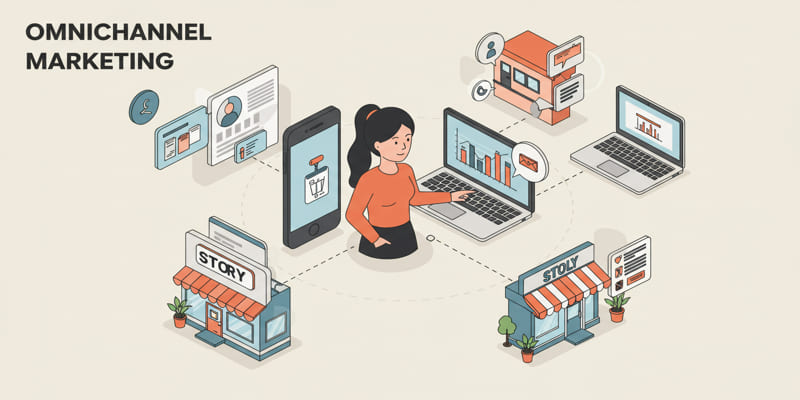 Omnichannel marketing unifies every sales and promotional method to help customers get the same experience no matter their interaction choice. Both online and in-store customers will get the same high-quality service and match their expectations across all your marketing channels.
Key Features of Omnichannel Marketing
- Our channels combine perfectly to deliver a single coordinated service to customers.
- Customer-Centric Approach: Focuses on understanding customer behavior and preferences.
- Consistent Branding: Maintains uniform messaging and visuals across platforms.
- Marketing Automation System Scripts Data to Provide Personal Interactions Matching What Customers Did Before.
Omnichannel vs. Multichannel Marketing
The methods need different implementation methods despite sharing the common goal of connecting with customers on all platforms. Here’s a comparison:
Feature | Omnichannel Marketing | Multichannel Marketing |
|---|---|---|
Integration | Channels are interconnected | Channels operate independently |
Customer Experience | Seamless and consistent | Varies by platform |
Focus | Customer-centric | Channel-centric |
Data Usage | Unified data sharing across platforms | Limited data integration |
Multichannel marketing reaches different platforms for maximum exposure, but this approach does not focus on connecting channels. Organization Prioritizes customer travel between platforms when doing omnichannel marketing.
Why Does Omnichannel Marketing Matter?
Omnichannel marketing represents an essential strategy that companies need to use to succeed in modern market competition. Here’s why it matters:
1. Enhanced Customer Experience
Customers expect easy and regular access to one brand when doing business. Omnichannel marketing gives customers smoother path experiences by combining different platforms, such as online research with in-store pickup, in one process.
2. Improved Personalization
Businesses produce custom interactions for their customers when they merge data from all contact points. Avoidance of these services shows businesses what a customer collects and buys for recommended choices.
3. Increased Customer Loyalty
Consistency builds trust and loyalty. Customers who have smooth interaction with our brand will buy from us repeatedly and spread the news about our brand.
4. Higher Revenue Generation
Shoppers going between different sales channels generate larger purchases than people who use only one method. Browsing multiple sales channels helps customers make bigger purchases than those who stick to one channel only. Studies reveal that customers using four or more channels spend 9% extra when they shop in-store.3
5. Better Operational Efficiency
Omnichannel strategies lower our operation costs by connecting all sales platforms with our inventory system to prevent duplicate work and control our supply chain processes.
Benefits of Omnichannel Marketing
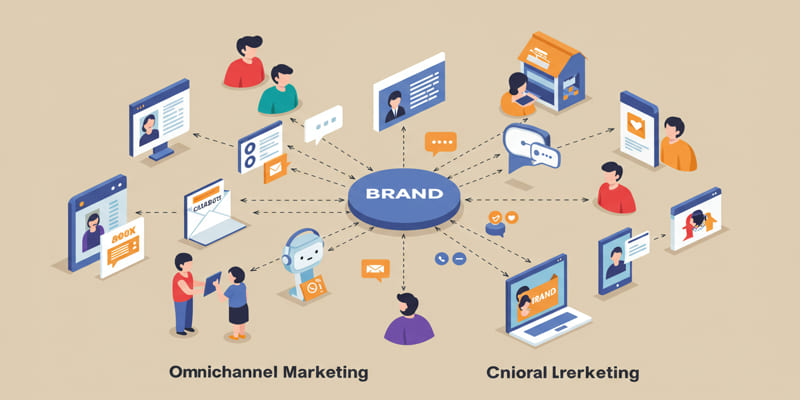 Organizations benefit more than customers from choosing omnichannel strategies that help the business grow.
Benefit | Description |
|---|---|
Boosted Sales | Seamless experiences encourage purchases across multiple channels. |
Customer Retention | Positive experiences inspire loyalty and repeat interactions. |
Expanded Reach | Engaging customers on diverse platforms increases visibility. |
Improved Brand Recognition | Consistent messaging strengthens brand identity. |
Higher ROI on Marketing Efforts | Unified strategies reduce acquisition costs while increasing conversions. |
How to Build an Effective Omnichannel Strategy
Setting up omnichannel marketing requires you to plan every step before starting work. To achieve success, you need to follow this method:
1. Understand Your Audience
Use customer data to find what areas of their shopping experience customers prefer and struggle with overall contact points.
2. Map the Customer Journey
Draw a complete picture of how people use your brand, starting with how they see it and continuing through making purchases.
3. Integrate Technology
Link your marketing system with CRM, marketing automation, and analytics tools to manage all customer data coming from different channels.
4. Ensure Consistent Branding
Keep all branding elements the same throughout your entire brand presence.
5. Personalize Interactions
Apply data learnings to give customers custom offerings such as email and advertising content generated from their web activity.
6. Optimize for Mobile
Adapt your digital platforms to ease mobile device viewing as mobile platform popularity grows.
7. Monitor Performance
Use performance data to check how often users buy from you and how often they stay as customers, plus how engaged the audience is to see what needs fixing.
Examples of Omnichannel Marketing Success
Different companies have shown good results using multiple sales channels at once.
Starbucks Rewards Program
- People can view their rewards account details on both the website and the app.
- The customer picks up rewards regardless of whether they shop online or at physical locations.
Nike
- The app gives customers custom shopping options for unique choices.
- Customers can look through our web store to select products and place them on hold for later pickup in one of our stores.
Amazon
- It delivers the same product prices for each user on both its online portal and mobile application.
- Customers can begin shopping from one device and then continue to another.
Challenges of Omnichannel Marketing
The advantages of omnichannel marketing face several difficulties that companies need to deal with.
- Combining many systems with a single approach demands substantial professional work.
- Organizations need to follow data privacy laws when they gather customer information such as GDPR.
- The first investment for technology installation costs a lot of money.
A company can improve these difficulties by adding flexible technology tools and telling users what data they process.
Conclusion
Omnichannel marketing is a core practice for companies because it provides superior customer service and helps them grow their business. Uniting all customer contact points in one strategy helps companies build more sales, create devoted clients, streamline operations, and reach new markets. Companies of any size can succeed against competition by using a complete online business approach in our digital world.
On this page
What Is Omnichannel Marketing? Key Features of Omnichannel Marketing Omnichannel vs. Multichannel Marketing Why Does Omnichannel Marketing Matter? 1. Enhanced Customer Experience 2. Improved Personalization 3. Increased Customer Loyalty 4. Higher Revenue Generation 5. Better Operational Efficiency Benefits of Omnichannel Marketing How to Build an Effective Omnichannel Strategy 1. Understand Your Audience 2. Map the Customer Journey 3. Integrate Technology 4. Ensure Consistent Branding 5. Personalize Interactions 6. Optimize for Mobile 7. Monitor Performance Examples of Omnichannel Marketing Success Starbucks Rewards Program Nike Amazon Challenges of Omnichannel Marketing ConclusionRelated Articles
Top Keyword Research Tools

The Basics of S and OP: A Beginner’s Guide to Sales and Operations Planning

Troubleshooting Video Editing Glitches: Tips and Fixes That Work

Quick and Simple Ways to Convert MPEG-4 to MP4 Format Online

9 Powerful Chrome Extensions for Effortless Screenshots

Calendly User Guide

Which Are The 6 Best Electronic Signature Apps to Sign Documents Online in 2025

5 Free PDF to Word Converters That Leave No Watermarks Behind
Perplexity vs. ChatGPT

Troubleshooting GitHub Push Errors Related to Authentication

How to Use Free Tools Online to Convert EPUB Files to PDF Format